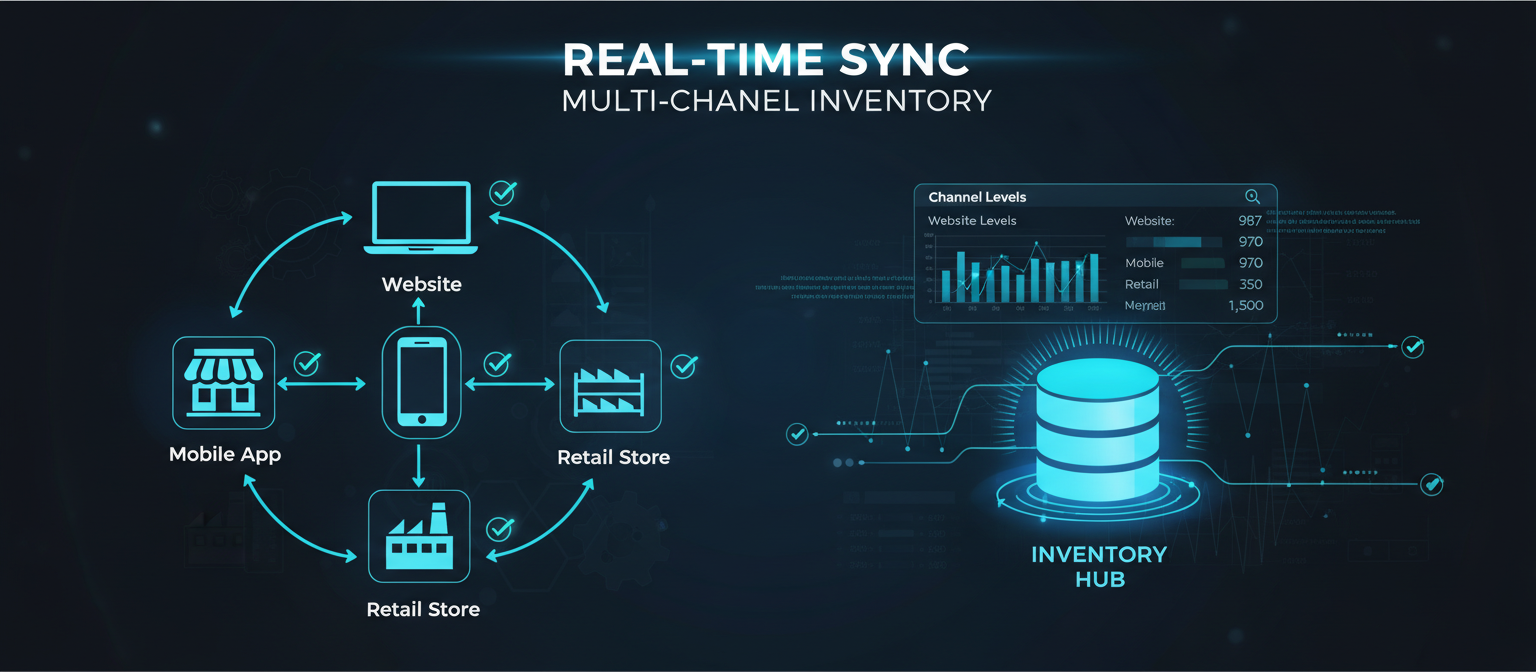
The Multi-Channel Inventory Challenge: When Stock Becomes Chaos
In 2024, businesses lost $1.75 trillion globally due to inventory mismanagement according to McKinsey research . When Nike's inventory system failed during a product launch, they oversold 50,000 pairs of limited-edition sneakers—costing them $25 million in refunds and customer trust.
When Shopify merchants sell across 20+ channels simultaneously, they're orchestrating complex systems that must maintain perfect synchronization. According to Oracle research , real-time inventory systems reduce stockouts by 65% and improve customer satisfaction by 40%.
This guide will show you how to build inventory systems that maintain perfect sync across all channels in real-time.
💡 The Real-Time Inventory Advantage
Real-time systems reduce stockouts by 65% and improve customer satisfaction by 40%. The difference between successful multi-channel businesses and failures?Real-time inventory synchronization.
After building inventory systems for companies managing millions of SKUs across dozens of channels, I've identified the patterns that separate synchronized systems from inventory chaos.
Real-Time Inventory Architecture: The Foundation of Sync
Real-time inventory management isn't just about tracking stock—it's about building systems that maintain perfect synchronization across all channels while handling thousands of transactions per second.
The Real-Time Inventory Stack
Event-Driven Architecture
📡 Event Streaming
Apache Kafka, AWS Kinesis, Google Pub/Sub
🔄 Event Processing
Real-time stream processing, CQRS patterns
Multi-Channel Integration
🚪 API Gateway
Centralized API management, rate limiting
🔌 Channel Adapters
Platform-specific integrations
Inventory Core Engine
📊 Stock Management
Available, reserved, allocated quantities
🎯 Allocation Logic
FIFO, LIFO, batch tracking
Real-Time Inventory System Architecture
Multi-Channel Inventory Architecture
💡 Pro Tip: Event-First Design
Design your inventory system around events, not requests. Event-driven architecture enables real-time sync and provides natural audit trails.
Multi-Channel Synchronization: Keeping Everything in Sync
Multi-channel sync isn't just about updating stock levels—it's about maintaining consistency across platforms with different data models, update frequencies, and conflict resolution strategies.
Synchronization Strategies
1. Real-Time Push Synchronization
Use Case: High-frequency updates, critical stock changes
Implementation: WebSocket connections, server-sent events
Benefits: Immediate consistency, low latency
Challenges: Network reliability, connection management
2. Batch Synchronization
Use Case: Bulk updates, non-critical changes
Implementation: Scheduled jobs, batch APIs
Benefits: Efficient resource usage, reliable delivery
Challenges: Delayed consistency, batch size optimization
3. Hybrid Synchronization
Use Case: Mixed update patterns, cost optimization
Implementation: Real-time for critical, batch for others
Benefits: Balanced performance and cost
Challenges: Complex logic, consistency management
Conflict Resolution Patterns
Inventory Conflict Resolution
API Integration Patterns: Connecting the Ecosystem
Modern inventory systems must integrate with dozens of platforms, each with different APIs, data formats, and rate limits. Building robust integration patterns is crucial for reliable synchronization.
Integration Architecture Patterns
1. Adapter Pattern
Purpose: Standardize different platform APIs
Implementation: Platform-specific adapters
Benefits: Consistent interface, easy maintenance
Example: Shopify adapter, Amazon adapter, eBay adapter
2. Circuit Breaker Pattern
Purpose: Handle API failures gracefully
Implementation: Automatic failure detection and recovery
Benefits: System resilience, graceful degradation
Example: Fallback to cached data during API outages
3. Retry Pattern with Exponential Backoff
Purpose: Handle temporary API failures
Implementation: Progressive retry delays
Benefits: Improved success rates, reduced load
Example: 1s, 2s, 4s, 8s retry intervals
Scalability and Performance: Handling Millions of Updates
As businesses grow, inventory systems must handle exponentially increasing transaction volumes while maintaining sub-second response times. Scalability isn't optional—it's essential for business growth.
Scalability Strategies
1. Horizontal Scaling
Microservices: Independent scaling of inventory services
Load Balancing: Distribute load across multiple instances
Database Sharding: Partition data by SKU, location, or channel
Auto-Scaling: Dynamic resource allocation based on load
2. Caching Strategies
Redis Clusters: Distributed caching for inventory data
CDN Caching: Cache static inventory information
Application Caching: In-memory caching for hot data
Database Caching: Query result caching, connection pooling
3. Performance Optimization
Database Optimization: Indexing, query optimization
Async Processing: Non-blocking operations, message queues
Batch Operations: Bulk updates, batch API calls
Connection Pooling: Efficient database connections
Real-World Implementation Stories: What Actually Works
Let's examine three real inventory system implementations—one breakthrough, one challenge, and one failure. Each reveals critical lessons for multi-channel inventory management.
Case Study 1: Shopify Plus Merchants' Multi-Channel Success
✅ The Success Story
Platform: Shopify Plus
Challenge: Sync inventory across 20+ sales channels
Solution: Event-driven architecture with real-time sync
Results: 99.9% sync accuracy, 0.1% overselling rate
What they did right:
- • Event-driven design: Built system around inventory events
- • Robust error handling: Comprehensive retry and fallback logic
- • Real-time monitoring: Continuous sync status tracking
- • Conflict resolution: Clear rules for handling sync conflicts
Building Future-Proof Inventory Systems: Your Multi-Channel Roadmap
Real-time inventory management isn't just about technology—it's about building systems that enable business growth while maintaining perfect accuracy across all channels. The companies that master multi-channel sync will dominate their markets.
Ready to Build Real-Time Inventory Systems?
Start with event-driven architecture, implement robust sync strategies, and monitor everything. The future belongs to businesses that can maintain perfect inventory accuracy across all channels.
The multi-channel revolution depends on perfect inventory sync. Companies that master real-time inventory management today will define the future of commerce tomorrow.