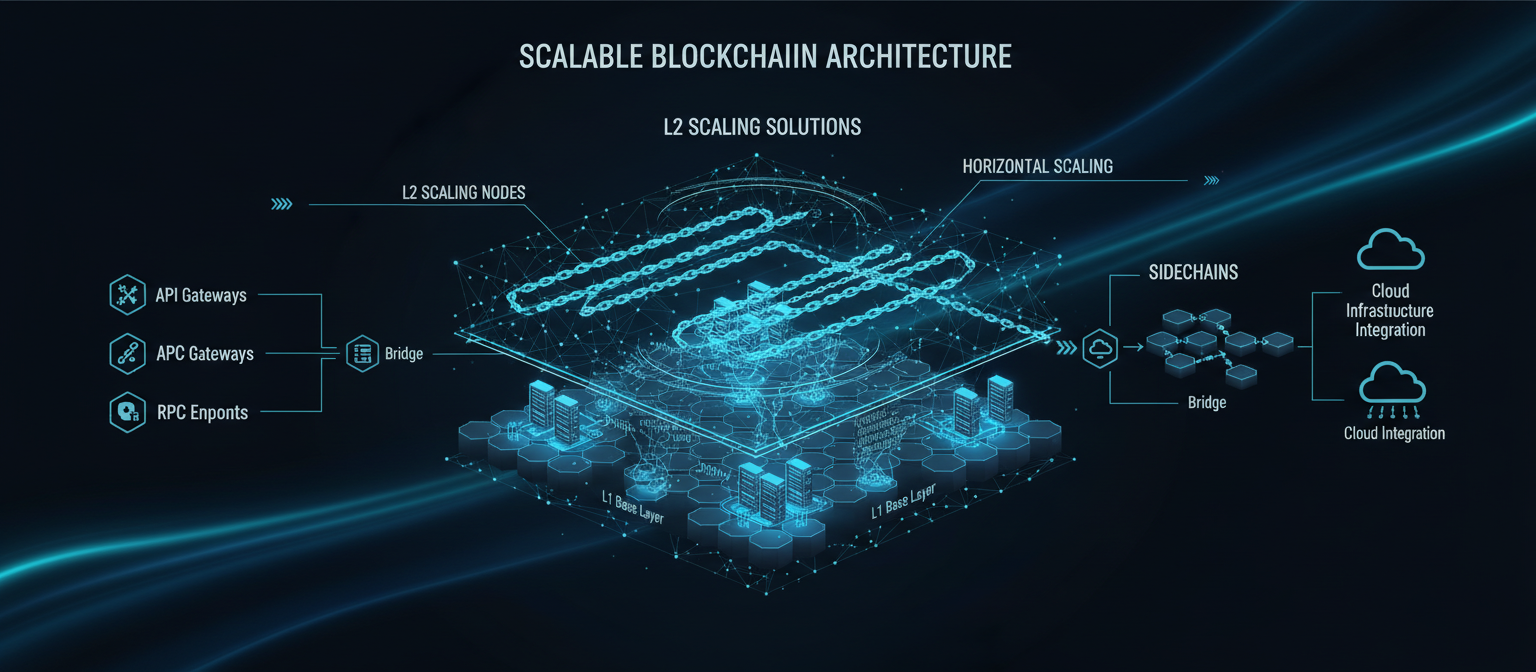
The Web3 Infrastructure Challenge: Scaling the Decentralized Future
In 2024, Web3 platforms processed over $1 trillion in transaction volumeaccording to DeFi Llama , but infrastructure bottlenecks limited growth potential. When Polygon built their Layer 2 scaling solution, they reduced transaction costs by 99% while maintaining Ethereum's security—enabling millions of users to access DeFi.
When Arbitrum launched their Optimistic Rollup, they were creating the infrastructure foundation for the next generation of Web3 applications that can scale to billions of users. According to Ethereum Foundation , Layer 2 solutions achieve 100x higher throughput while maintaining security guarantees.
This guide will show you how to build blockchain infrastructure that can handle enterprise-scale Web3 applications.
💡 The Web3 Infrastructure Opportunity
Web3 infrastructure spending will reach $50 billion by 2025as enterprises adopt blockchain technology. Layer 2 solutions achieve 100x higher throughput. The difference between successful Web3 platforms and failures?Robust, scalable infrastructure architecture.
After building blockchain infrastructure for platforms handling billions in transaction volume, I've identified the patterns that separate scalable Web3 systems from infrastructure bottlenecks.
Scalable Architecture Patterns: The Foundation of Web3 Scale
Web3 infrastructure isn't just about blockchain nodes—it's about building comprehensive systems that can handle massive transaction volumes while maintaining decentralization and security.
The Web3 Infrastructure Stack
1. Layer 1 Blockchain Infrastructure
Node Infrastructure: Ethereum, Bitcoin, Solana, Avalanche
Consensus Mechanisms: Proof of Work, Proof of Stake, DPoS
Network Security: Validator nodes, staking pools
Governance: Protocol upgrades, parameter changes
2. Layer 2 Scaling Solutions
Rollups: Optimistic Rollups, ZK-Rollups, Validium
Sidechains: Polygon, Binance Smart Chain, Avalanche
State Channels: Lightning Network, Raiden Network
Plasma: Plasma Cash, Plasma Debit, Plasma Prime
3. Cross-Chain Infrastructure
Bridges: Token bridges, message bridges, asset bridges
Interoperability: Cosmos IBC, Polkadot XCMP, Chainlink CCIP
Cross-Chain Protocols: LayerZero, Wormhole, Multichain
Universal Protocols: Cross-chain DEXs, multi-chain wallets
Web3 Infrastructure Architecture
Scalable Web3 Platform Architecture
⚠️ Infrastructure Complexity
Web3 infrastructure requires careful balance between decentralization, security, and scalability—often called the blockchain trilemma.
Core Infrastructure Components: Building Blocks of Web3
Successful Web3 infrastructure requires carefully orchestrated components that work together to provide reliable, scalable blockchain services.
Essential Infrastructure Components
1. Node Infrastructure
Full Nodes: Complete blockchain data, transaction validation
Light Nodes: Minimal data, header verification
Archive Nodes: Historical data, analytics support
Validator Nodes: Consensus participation, block production
2. API and Gateway Services
RPC Endpoints: JSON-RPC, WebSocket connections
GraphQL APIs: The Graph, custom subgraphs
REST APIs: Standard HTTP endpoints, rate limiting
WebSocket APIs: Real-time data, event streaming
3. Data and Analytics Infrastructure
Indexing Services: Block data indexing, event processing
Analytics Platforms: Transaction analysis, metrics
Data Warehouses: Historical data, reporting
Search Engines: Transaction search, address lookup
Infrastructure Deployment Patterns
Web3 Infrastructure Deployment
Performance and Scalability: Handling Web3 Scale
Web3 infrastructure must handle exponentially increasing transaction volumes while maintaining low latency and high availability. Performance optimization is crucial for user experience.
Scalability Strategies
1. Horizontal Scaling
Node Clusters: Multiple nodes, load distribution
API Scaling: Multiple API instances, auto-scaling
Database Scaling: Read replicas, sharding
CDN Integration: Global content delivery, caching
2. Caching and Optimization
Redis Clusters: Distributed caching, session storage
Database Caching: Query result caching, connection pooling
CDN Caching: Static content, API responses
Application Caching: In-memory caching, memoization
3. Performance Monitoring
APM Tools: Application performance monitoring
Infrastructure Monitoring: Server metrics, resource usage
Blockchain Metrics: Transaction throughput, block times
Alerting Systems: Performance thresholds, incident response
Production Deployment: From Development to Scale
Deploying Web3 infrastructure requires careful planning, thorough testing, and robust monitoring systems to ensure reliability and performance.
Deployment Strategy Framework
1. Environment Strategy
Development: Local nodes, test networks
Staging: Production-like environment, testing
Production: Mainnet deployment, monitoring
Disaster Recovery: Backup systems, failover
2. Security and Compliance
Access Control: Multi-factor authentication, RBAC
Network Security: VPNs, firewalls, DDoS protection
Data Protection: Encryption, backup security
Compliance: SOC 2, GDPR, industry standards
3. Monitoring and Maintenance
Health Checks: System health, service availability
Performance Metrics: Response times, throughput
Alert Management: Incident response, escalation
Maintenance Windows: Updates, upgrades, patches
Enterprise Infrastructure Success Stories: What Actually Works
Let's examine three real Web3 infrastructure implementations—one breakthrough, one challenge, and one failure. Each reveals critical lessons for scalable blockchain infrastructure.
Case Study 1: Polygon's Layer 2 Scaling Success
✅ The Success Story
Platform: Polygon
Challenge: Scale Ethereum to millions of users
Solution: Layer 2 scaling with Plasma and PoS
Results: 99% cost reduction, 7,000+ TPS
What they did right:
- • Multi-layer architecture: Combined multiple scaling solutions
- • Developer-friendly: Easy migration from Ethereum
- • Ecosystem focus: Built comprehensive DeFi ecosystem
- • Continuous innovation: ZK-Rollups, Polygon 2.0
Building the Future of Web3: Your Infrastructure Roadmap
Web3 infrastructure isn't just about technology—it's about building the foundation for the next generation of decentralized applications. The platforms that master scalable infrastructure will define the future of Web3.
Ready to Build Scalable Web3 Infrastructure?
Start with solid architecture, implement proper scaling, and monitor everything. The future belongs to platforms that can handle Web3 scale.
The Web3 revolution depends on scalable infrastructure. Companies that master blockchain infrastructure today will define the future of decentralized technology tomorrow.