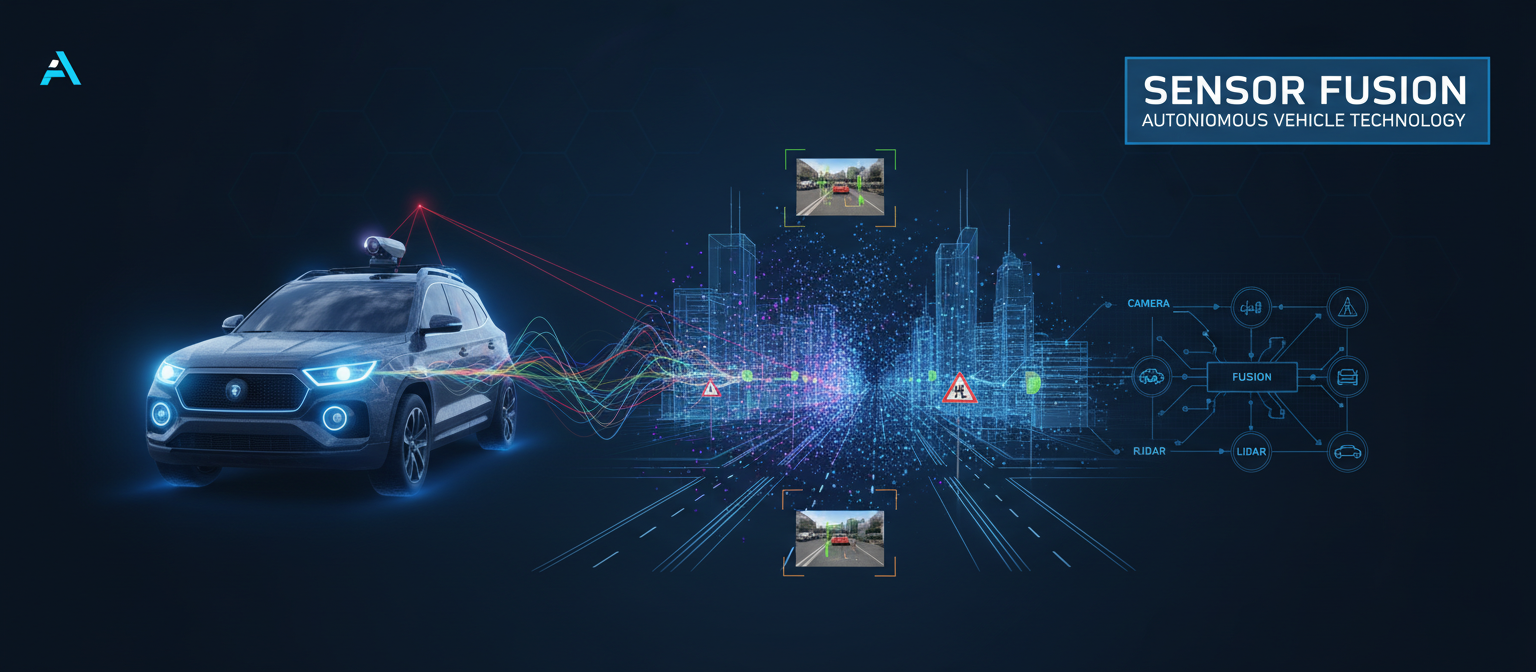
The Perception Challenge: Why Single Sensors Aren't Enough
⚠️ The Perception Reality Check
The 2016 Tesla crash in Florida involved a system that did include radar—not cameras alone. The NTSB investigation identified multiple factors including driver inattention and system limitations. This highlights whyredundant multi-modal perception is critical for safety.
When Waymo's 6th-generation vehicles navigate Phoenix streets, they process data from 13 cameras, 4 LiDAR units, and 6 radar sensors simultaneously. According to Waymo's Swiss Re insurance study , their autonomous vehicles showed 88% fewer property damage claims and92% fewer bodily injury claims compared to human drivers over 25.3 million miles.
The question isn't whether to use sensor fusion—it's how to do it right.
💡 The Sensor Fusion Advantage
Multi-modal fusion provides redundancy and complementary strengthsthat single sensors cannot match. On benchmark datasets like nuScenes, fusion methods like BEVFusion achieve67.9% NDS (nuScenes Detection Score) compared to camera-only baselines at 56.9% NDS. The difference between Level 2 and Level 5 autonomy isn't just better algorithms—it'srobust multi-modal perception validated across diverse conditions.
After analyzing perception systems from Tesla, Waymo, Cruise, and Aurora, I've identified the patterns that separate production-ready sensor fusion from research prototypes.
Sensor Fundamentals: Camera, LiDAR, and Radar
Understanding each sensor's strengths and limitations is crucial for effective fusion.Each sensor provides different information at different frequencies and resolutions—the art is combining them intelligently.
The Three Pillars of Autonomous Perception
Camera Systems
✓ Rich semantic info
✗ Weather dependent
LiDAR Systems
✓ Precise 3D mapping
✗ Expensive
Radar Systems
✓ All-weather operation
✗ Low resolution
Sensor Fusion Architecture
Complete Sensor Fusion Pipeline
Complete sensor fusion architecture showing data flow from raw sensor inputs through preprocessing, temporal alignment, fusion algorithms, and final outputs for autonomous vehicle perception.
AUTONOMOUS VEHICLE SENSOR FUSION ARCHITECTURE
================================================

┌─────────────────────────────────────────────────────────────────────────────────┐
│                           SENSOR DATA INPUTS                                    │
├─────────────────┬─────────────────┬─────────────────┬───────────────────────────┤
│   CAMERA DATA   │   LIDAR DATA    │   RADAR DATA    │   TIMESTAMP SYNC          │
│                 │                 │                 │                           │
│ • RGB Images    │ • Point Clouds  │ • Range-Doppler │ • IEEE 802.1AS (gPTP)     │
│ • 30 FPS        │ • 10 Hz         │ • 77-81 GHz     │ • Sub-μs precision        │
│ • 2-8MP         │ • 64-128 lines  │ • 250m+ range   │ • Temporal alignment      │
│ • 50-200m range │ • ±2cm accuracy │ • Velocity data │                           │
└─────────────────┴─────────────────┴─────────────────┴───────────────────────────┘
                                    │
                                    ▼
┌─────────────────────────────────────────────────────────────────────────────────┐
│                        DATA PREPROCESSING & ALIGNMENT                           │
├──────────────────┬────────────────┬──────────────────┬──────────────────────────┤
│  CAMERA PROC     │  LIDAR PROC    │  RADAR PROC      │   CALIBRATION            │
│                  │                │                  │                          │
│ • HDR Processing │ • Noise Filter │ • CFAR Detection │ • Intrinsic/Extrinsic    │
│ • Distortion Corr│ • Ground Seg   │ • Clustering     │ • Online Drift Monitor   │
│ • Feature Extract│ • Voxelization │ • Track Init     │ • Reprojection Check     │
│ • CNN Backbone   │ • PointNet     │ • Doppler Proc   │                          │
└──────────────────┴────────────────┴──────────────────┴──────────────────────────┘
                                    │
                                    ▼
┌─────────────────────────────────────────────────────────────────────────────────┐
│                         TEMPORAL ALIGNMENT LAYER                                │
│                                                                                 │
│  ┌─────────────┐    ┌─────────────┐    ┌─────────────┐                          │
│  │   Camera    │    │   LiDAR     │    │   Radar     │                          │
│  │ Features    │    │ Features    │    │ Features    │                          │
│  │ (256-dim)   │    │ (256-dim)   │    │ (128-dim)   │                          │
│  └─────────────┘    └─────────────┘    └─────────────┘                          │
│         │                   │                   │                               │
│         └───────────────────┼───────────────────┘                               │
│                             │                                                   │
│                    ┌─────────────┐                                              │
│                    │Interpolation│                                              │
│                    │to Reference │                                              │
│                    │Timestamp    │                                              │
│                    └─────────────┘                                              │
└─────────────────────────────────────────────────────────────────────────────────┘
                                    │
                                    ▼
┌─────────────────────────────────────────────────────────────────────────────────┐
│                        FUSION ALGORITHMS & NEURAL NETWORKS                      │
├─────────────────┬─────────────────┬──────────────────┬──────────────────────────┤
│   EARLY FUSION  │   LATE FUSION   │   DEEP FUSION    │   BEV UNIFICATION        │
│                 │                 │                  │                          │
│ • Raw Data      │ • Feature Concat│ • Attention Mech │ • Bird's-Eye View        │
│ • High Accuracy │ • Robust Debug  │ • Learned Weights│ • Multi-Task Learning    │
│ • High Compute  │ • Lower Latency │ • Dynamic Fusion │ • Detection + Mapping    │
│ • Sensitive     │ • Modular       │ • Context Aware  │ • Temporal Memory        │
└─────────────────┴─────────────────┴──────────────────┴──────────────────────────┘
                                    │
                                    ▼
┌─────────────────────────────────────────────────────────────────────────────────┐
│                         FUSION NETWORK ARCHITECTURE                             │
│                                                                                 │
│  ┌─────────────┐    ┌─────────────┐    ┌─────────────┐                          │
│  │   Camera    │    │   LiDAR     │    │   Radar     │                          │
│  │ Encoder     │    │ Encoder     │    │ Encoder     │                          │
│  │ (CNN)       │    │ (PointNet)  │    │ (MLP)       │                          │
│  └─────────────┘    └─────────────┘    └─────────────┘                          │
│         │                   │                   │                               │
│         └───────────────────┼───────────────────┘                               │
│                             │                                                   │
│                    ┌─────────────┐                                              │
│                    │   Fusion    │                                              │
│                    │   Network   │                                              │
│                    │ (512-dim)   │                                              │
│                    └─────────────┘                                              │
│                             │                                                   │
│                    ┌─────────────┐                                              │
│                    │ Multi-Head  │                                              │
│                    │ Attention   │                                              │
│                    │ (8 heads)   │                                              │
│                    └─────────────┘                                              │
└─────────────────────────────────────────────────────────────────────────────────┘
                                   │
                                   ▼
┌─────────────────────────────────────────────────────────────────────────────────┐
│                      OBJECT DETECTION & TRACKING OUTPUTS                        │
├─────────────────┬─────────────────┬─────────────────┬───────────────────────────┤
│  3D DETECTION   │   CONFIDENCE    │   UNCERTAINTY   │   TRACKING                │
│                 │   SCORING       │   ESTIMATION    │                           │
│ • Bounding Boxes│ • Sensor Agree  │ • Evidential DL │ • Multi-Object Track      │
│ • Class Labels  │ • Fusion Conf   │ • MC Dropout    │ • Kalman/IMM Filter       │
│ • 3D Positions  │ • Temporal Cons │ • Ensemble Pred │ • Track Association       │
│ • Orientations  │ • ODD Awareness │ • Failure Det   │ • Track Management        │
└─────────────────┴─────────────────┴─────────────────┴───────────────────────────┘
⚠️ Production Requirements
Real-world systems require additional components: PTP time synchronization, calibration drift monitoring, uncertainty estimation, multi-object tracking, and ODD (Operational Design Domain) handling. The architecture above shows core concepts, not a complete production implementation.
Benchmarks & Metrics: Measuring Fusion Performance
Understanding how to evaluate sensor fusion systems requires standardized benchmarks and metrics.The autonomous vehicle industry relies on specific datasets and evaluation protocolsto compare different approaches objectively.
📊 Understanding NDS (nuScenes Detection Score)
NDS is the primary evaluation metric for the nuScenes dataset, combining multiple error types: mAP (mean Average Precision), ATE (Average Translation Error), ASE (Average Scale Error), AOE (Average Orientation Error), AVE (Average Velocity Error), and AAE (Average Attribute Error). It provides a comprehensive measure of 3D object detection performance.
Key Benchmark Datasets
Primary Evaluation Datasets
Fusion Performance Comparison
Benchmark Results on nuScenes Dataset
Performance comparison showing the impact of sensor fusion approaches. Data sourced from published papers and official leaderboards.
| Method | Modalities | NDS | mAP | Source |
|---|---|---|---|---|
| BEVFormer | Camera Only | 56.9% | 48.1% | ECCV 2022 |
| BEVFusion | LiDAR + Camera | 67.9% | 68.5% | NeurIPS 2022 |
| CenterFusion | Radar + Camera | 59.1% | 50.8% | WACV 2021 |
| RCM-Fusion | Radar + Camera | 58.7% | 49.2% | 2024 |
💡 Key Takeaway: Fusion Provides Measurable Gains
BEVFusion's 67.9% NDS represents a 19.3% improvementover camera-only BEVFormer (56.9% NDS) on nuScenes. This demonstrates the concrete value of multi-modal fusion in standardized evaluation scenarios.
Sensor Fusion Algorithms: From Early to Late Fusion
The choice of fusion algorithm determines your system's performance and computational requirements.Early fusion combines raw sensor data, while late fusion combines processed features—each has distinct advantages.
🔄 Fusion Strategy Comparison
Early fusion combines raw sensor data before processing, offering high accuracy but requiring significant compute.Late fusion combines processed features from each sensor, providing robustness and easier debugging.Deep fusion uses learned fusion mechanisms (like attention) to dynamically weight sensor contributions.
Fusion Strategy Comparison
Sensor Fusion Strategy Comparison
| Strategy | Accuracy | Latency | Robustness | Use Case |
|---|---|---|---|---|
| Early Fusion | High | Low | Medium | Research, High-end systems |
| Late Fusion | Medium | High | High | Production systems |
| Deep Fusion | Very High | Medium | High | Next-gen systems |
💡 Pro Tip: Choose Your Fusion Strategy
Start with late fusion for production systems—it's more robust and easier to debug. Move to early fusion only when you need maximum accuracy and have sufficient compute resources.
Safety Standards & Validation Frameworks
Production sensor fusion systems must comply with automotive safety standards that definefunctional safety, safety of the intended functionality (SOTIF), and validation requirements. These standards provide the framework for building trustworthy autonomous systems.
Key Safety Standards
ISO 21448 (SOTIF)
Safety of the Intended Functionality addresses hazards from functional insufficiencies and misuse. Critical for perception systems handling edge cases.
✓ Hazard analysis & risk assessment
✓ Verification & validation planning
✓ Residual risk acceptance criteria
UL 4600
Standard for Safety Evaluation of autonomous vehicles. Provides comprehensive safety case requirements including perception validation.
✓ Safety case development
✓ Operational design domain
✓ Continuous monitoring
Validation Framework
Scenario-Based Validation
💡 Standards Integration
Production sensor fusion systems integrate these standards through hazard analysis, verification planning, and continuous monitoring. The standards provide the framework, but implementation requires domain expertise in perception, safety engineering, and validation.
Time Synchronization & Calibration
Production sensor fusion requires precise time synchronization and accurate calibrationto achieve reliable multi-modal perception. Without proper timing and calibration, fusion performance degrades significantly.
Time Synchronization Requirements
IEEE 802.1AS (gPTP) for Automotive
Calibration Management
Initial Calibration
✓ Target-based optimization
✓ Multi-sensor bundle adjustment
Online Monitoring
✓ Continuous monitoring
✓ Automatic correction
💡 Production Reality
Calibration drift is inevitable due to temperature changes, vibrations, and mechanical wear. Production systems must include online drift detection and automatic recalibrationto maintain fusion performance over vehicle lifetime.
Adverse Weather & Edge Cases
Real-world autonomous vehicles must operate in challenging conditions where individual sensors fail.Multi-modal fusion provides redundancy that single sensors cannot achieve.
Weather-Specific Sensor Performance
Sensor Performance Matrix
Performance degradation of individual sensors in adverse conditions. Fusion provides robustness by combining complementary sensor strengths.
| Condition | Camera | LiDAR | Radar | Fusion Benefit |
|---|---|---|---|---|
| Heavy Rain | Severe degradation | Range reduction | Minimal impact | High |
| Fog | Visibility loss | Scattering issues | Good performance | Critical |
| Snow | Contrast loss | Reflection noise | Reliable | High |
| Night | Poor illumination | Good performance | Good performance | Medium |
Specialized Datasets for Validation
Adverse Weather Datasets
Production Implementation: Real-World Sensor Fusion
Building sensor fusion systems for production requires more than algorithms—it requires robust software architecture, real-time processing, and comprehensive testing.
Production System Architecture
Production Sensor Fusion Stack
Real-World Case Studies: What Actually Works
Let's examine real autonomous vehicle implementations with documented safety outcomes and challenges. Each case reveals critical lessons for production sensor fusion systems.
Case Study 1: Waymo's Multi-Modal Success
✅ The Success Story
Company: Waymo (Google/Alphabet)
Challenge: Navigate complex urban environments safely
Solution: 13 cameras + 4 LiDAR + 6 radar sensors (6th-gen)
Results: 88% fewer property damage claims, 92% fewer bodily injury claims vs human drivers over 25.3M miles
What they did right:
- • Redundant sensor coverage: Multiple sensors for each detection zone
- • Conservative fusion: High confidence thresholds for safety-critical decisions
- • Extensive testing: Billions of miles in simulation before real-world deployment
- • Continuous learning: System improves with every mile driven
Case Study 2: Cruise's Regulatory Challenge
⚠️ The Challenge Story
Company: Cruise (GM)
Incident: October 2023 pedestrian crash in San Francisco
Regulatory Response: CA DMV suspension and NHTSA consent order
Lesson: Post-incident transparency and safety case documentation are critical
Key lessons from Cruise:
- • Perception edge cases: Systems must handle rare scenarios gracefully
- • Transparency requirements: Regulatory bodies demand detailed incident reporting
- • Safety case documentation: Comprehensive validation evidence is mandatory
- • Operational design domain: Clear limitations must be defined and respected
Case Study 3: Tesla's Evolving Sensor Strategy
🔄 The Evolution Story
Company: Tesla
Strategy: "Tesla Vision" camera-only approach
Evolution: Removed radar (2021) and ultrasonic sensors (2022), but FCC filings suggest radar return
Debate: Economics vs. redundancy trade-offs in sensor selection
Tesla's approach highlights:
- • Cost optimization: Fewer sensors reduce BOM and complexity
- • Data advantage: Massive fleet provides training data for camera-only systems
- • Computational efficiency: Single modality simplifies processing pipeline
- • Weather limitations: Camera-only systems face challenges in adverse conditions
💡 Case Study Insights
These cases demonstrate that sensor fusion strategy depends on business model, operational domain, and risk tolerance. Waymo prioritizes safety through redundancy, Cruise learned about regulatory requirements, and Tesla explores cost-performance trade-offs.
🤔 Is LiDAR Necessary for Level 4 Autonomy?
While camera-only approaches (like Tesla Vision) can work in controlled conditions,LiDAR provides critical redundancy for adverse weather and edge cases. Most Level 4 deployments use multi-modal fusion for robustness, though sensor selection depends on operational design domain and risk tolerance.
Your Next Steps: From Research to Production
Sensor fusion isn't just about combining data—it's about building systems that work reliably in every condition. The companies that master multi-modal perception will dominate the autonomous vehicle market.
Ready to Build Production-Ready Sensor Fusion?
Start with late fusion, implement robust validation, and test extensively. The future of autonomous vehicles depends on reliable multi-modal perception.
The autonomous vehicle revolution isn't coming—it's here. Companies that invest in robust sensor fusion today will have insurmountable competitive advantages tomorrow.